
Hudson County Active Warrant Search
Hudson County processes roughly 12,000 bench warrants each year. The Sheriff's Office at 257 Cornelison Avenue in Jersey City manages warrant enforcement for a population of over 750,000 people across 12 municipalities. With more than 300 personnel, this is one of the largest sheriff's offices in the state. The Warrant Division handles all warrant searches and can be reached at (201) 915-1300 ext. 7233 or 7312.
Hudson County Quick Facts
Hudson County Sheriff's Office Warrant Records
The Hudson County Sheriff's Office is the primary agency for warrant enforcement. Located at 257 Cornelison Avenue in Jersey City, the office handles all types of warrants issued by Hudson County courts. The Warrant Division is a dedicated unit within the office. Officers serve warrants, track fugitives, and process warrant inquiries from the public.
Hudson County's Warrant Division staff answer calls at (201) 915-1300 ext. 7233 or 7312. They can tell you if a warrant exists for a specific person. You need to provide the full legal name and date of birth. A Social Security number helps narrow the search in Hudson County. Walk-in visits are also welcome during business hours. Bring a valid photo ID with you.
The Hudson County Sheriff's Office website provides details on warrant services and fugitive information.
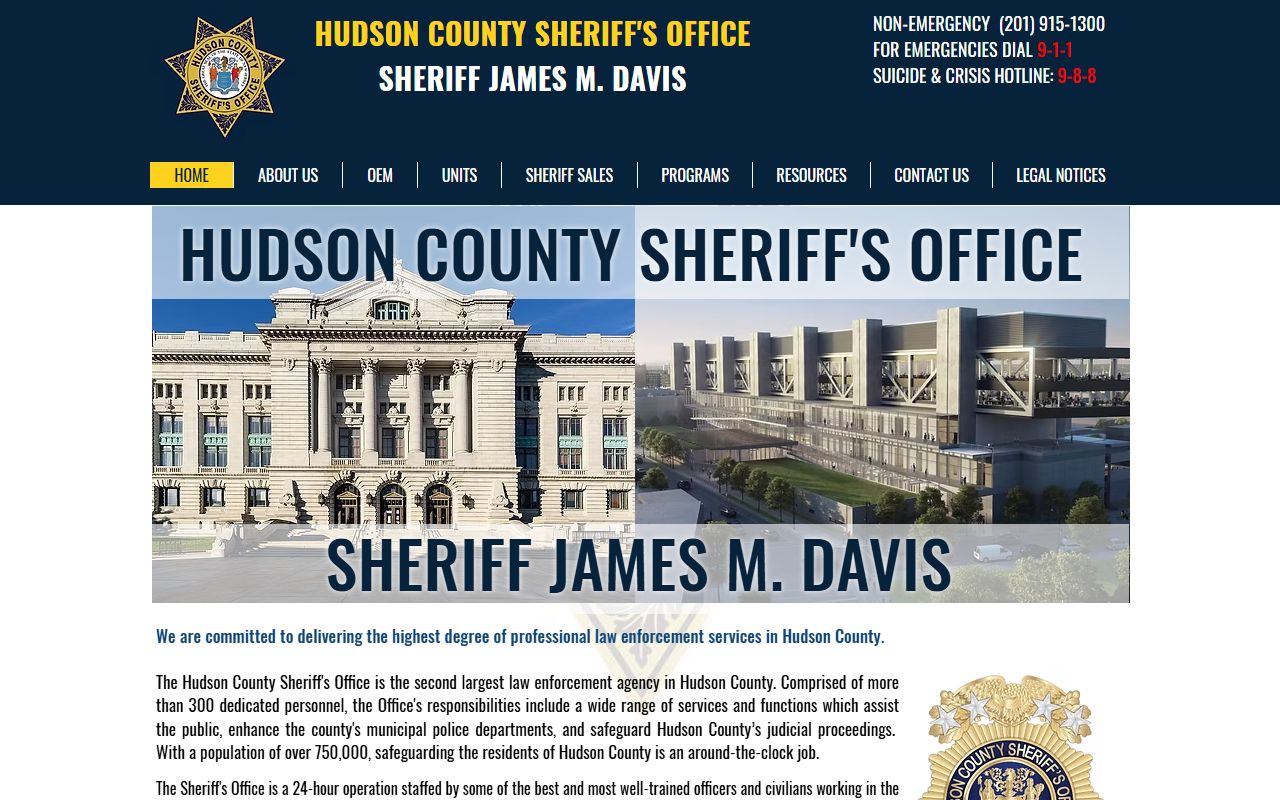
The site includes information about the Sheriff's various divisions and contact details for specific units within Hudson County.
| Sheriff |
Hudson County Sheriff's Office 257 Cornelison Ave Jersey City, NJ 07302 Phone: (201) 915-1300 Warrants: ext. 7233 or 7312 |
|---|---|
| Foreclosure | 257 Cornelison Ave, Room 2001, (201) 795-6300 ext 7233/7312 |
| Website | hudsoncountysheriff.com |
How to Check Hudson County Warrant Records
There are four main ways to check for warrants in Hudson County. Each has its own advantages. Choose the one that works best for your situation.
Call the Warrant Division. This is the quickest option. Dial (201) 915-1300 ext. 7233 or 7312. Give the person's full name and date of birth. Staff will check the system and let you know. Phone checks are free in Hudson County. They take just a few minutes during normal hours.
Visit in person. Go to 257 Cornelison Avenue in Jersey City. The Warrant Division is open during business hours. You will need a photo ID. Staff can run a warrant check right there. You can also visit the Superior Court at 595 Newark Avenue for court-related warrant inquiries in Hudson County.
Search online through the NJ Judiciary Public Access portal. This free tool shows criminal case data for all New Jersey counties, including Hudson County. You can search by name or case number. The portal does not show all active warrants but does display case status and court dates.
Contact local police. The Jersey City Police Department at (201) 547-5477 can also run warrant checks. Other municipal police departments in Hudson County can do the same. This works well if you are closer to a local station than the Sheriff's Office.
Note: You must provide your full name, date of birth, and Social Security number for a complete warrant check in Hudson County.
Types of Warrant Records in Hudson County
Hudson County courts issue many types of warrants. The type depends on the situation and the court involved. Each carries different consequences and resolution processes.
Arrest warrants start with a complaint. A judge or prosecutor reviews the evidence and signs the warrant if probable cause exists. These are for new criminal charges in Hudson County. Police can serve them at any time, day or night. Bench warrants are the most common type. Hudson County issues about 12,000 each year. A bench warrant means you missed a court date or violated a court order. These warrants stay active in the system until resolved.
- Arrest warrants for new criminal charges
- Bench warrants for missed court dates
- Search warrants for property searches
- Capias warrants for contempt of court
- Child support warrants for payment default
- Fugitive warrants for out-of-state charges
- Administrative warrants for regulatory matters
Capias warrants differ from bench warrants in Hudson County. A capias is issued for civil contempt, often in family court matters. Fugitive warrants apply when another state asks New Jersey to arrest someone. The Hudson County Sheriff's Office processes all of these warrant types.
Hudson County Superior Court Warrant Proceedings
The Hudson County Superior Court at 595 Newark Avenue in Jersey City handles major warrant cases. Call (201) 795-6400 for court information. The Prosecutor's Office is on the 6th floor of the same building. Both offices work together on warrant cases in Hudson County.
When someone is arrested on a warrant in Hudson County, they see a judge within 48 hours. The judge reviews the charges and sets bail or release conditions. Under New Jersey's Criminal Justice Reform Act, many defendants are released on conditions rather than held on cash bail. The court uses a risk assessment tool to make this decision. Serious charges may result in pretrial detention in Hudson County.
Municipal courts in Hudson County handle lower-level warrants. Each of the 12 municipalities has its own court. These courts issue bench warrants for traffic tickets, disorderly persons offenses, and local ordinance violations. You must contact the specific municipal court to resolve these warrants. The Superior Court does not handle municipal court warrants in Hudson County.
Note: Voluntary surrender on a warrant in Hudson County often results in more favorable treatment than being arrested during a traffic stop or other encounter.
Public Access to Hudson County Warrant Records
Active warrants in Hudson County are generally not public records. Under N.J.S.A. 47:1A-1.1, law enforcement records can be withheld if disclosure would interfere with ongoing investigations. This means you cannot get a full list of active warrants through an OPRA request in Hudson County. However, you can ask about a specific person.
The Hudson County Clerk's Office handles public record requests for court documents.

The Clerk processes requests for case files, court orders, and certified copies of Hudson County documents.
Once a warrant is served and the case is closed, those records become more accessible in Hudson County. Court records for concluded cases are available through the clerk. The NJ Courts website also provides access to case information. Criminal case records show charges, court dates, and dispositions. You can search them online for free through the public access portal for Hudson County.
Resolving Warrants in Hudson County
Do not ignore a warrant. It will not go away on its own. Hudson County warrants stay active until a judge recalls them or they are served. Taking action is always better than waiting.
For bench warrants, contact the court that issued it. Ask the clerk about your options. Many courts in Hudson County allow you to appear and get a new court date. Some bench warrants have bail amounts attached. You may be able to post bail at the court window and receive a hearing date. For arrest warrants, hire an attorney if you can. A lawyer can contact the Hudson County Prosecutor and arrange a surrender. This shows the court you are cooperating.
The NJ State Bar Association referral line is 1-800-792-8315. They can connect you with a criminal defense attorney in Hudson County. Legal Aid of New Jersey serves low-income residents who cannot afford a private lawyer. Call (888) 576-5529 for help with your Hudson County warrant case.
Cities in Hudson County
Hudson County has 12 municipalities. All Superior Court warrant cases are handled in Jersey City. Each municipality also has its own municipal court for local warrant matters.
Municipalities in Hudson County include Jersey City, Hoboken, Bayonne, North Bergen, West New York, Union City, Secaucus, Kearny, Harrison, East Newark, Guttenberg, and Weehawken. Each town has a municipal court that issues its own warrants in Hudson County.
Nearby Counties
These counties border Hudson County. A warrant issued in one county is valid statewide but must be resolved in the court that issued it.