
Search New Jersey Warrant Records
New Jersey warrant records are kept by courts and law enforcement across the state's 21 counties. These records show active arrest warrants, bench warrants, and search warrants issued by judges in both Superior Court and municipal courts. You can search for New Jersey warrant records through free state databases, county clerk offices, and online court portals. The New Jersey Judiciary provides public access tools that let anyone look up warrant records by name or case number from any location in the state.
New Jersey Warrant Records Quick Facts
How to Search Warrant Records in New Jersey
New Jersey offers several free tools for searching warrant records. The most useful is the PROMIS/Gavel Public Access system. This portal covers felony-level cases heard in Superior Court. You can search by defendant name, indictment number, or complaint number. Results show case status, charges, and court dates. The system is free and open to the public at all times.
For lower-level offenses, New Jersey runs the Municipal Court Case Search system. MCCS handles disorderly persons offenses, traffic matters, and local ordinance cases. These cases are heard in one of the state's 500-plus municipal courts. Warrant records tied to missed court dates often appear in this system. Both tools are hosted by the New Jersey Judiciary and require no registration to use.
You can also call or visit any county courthouse to ask about warrant records. Clerk staff can look up cases and confirm if a warrant is active. Some county sheriff offices post active warrants on their websites. Each of New Jersey's 21 counties handles warrant records through its own court system, so the process may vary slightly by location. Start with the online tools for the fastest results.
Types of Warrants in New Jersey Warrant Records
New Jersey law defines several types of warrants. Each serves a different purpose in the criminal justice system. Arrest warrants are the most common type found in New Jersey warrant records. Under N.J.S.A. 2C:104-4 and Court Rule 3:3-1, a judge issues an arrest warrant when there is probable cause to believe a person committed a crime. The warrant names the person and describes the offense. Law enforcement can then arrest that person anywhere in the state.
Bench warrants are another frequent type in New Jersey warrant records. A judge issues a bench warrant when someone fails to appear in court. Court Rule 7:2-3 governs bench warrants in municipal court cases. These warrants stay active until the person turns themselves in or is picked up by police. Bench warrants appear in warrant records tied to both Superior Court and municipal court cases across New Jersey.
The New Jersey Code of Criminal Justice also provides for search warrants. Court Rule 3:5 sets the rules for these warrants. A judge must find probable cause that evidence of a crime exists at a specific location. Once issued, police have a 10-day window to carry out the search. Search warrant records in New Jersey become part of the court file after the warrant is served.
Capias warrants round out the main types. Courts issue these to compel a person to appear before the court. They are common in cases where a defendant violates probation or fails to pay fines. All of these warrant types create records that flow into the state court system in New Jersey.
The New Jersey statutes lay out the rules for each warrant type in detail. You can review the full text of the criminal code through FindLaw's online database for New Jersey.
The New Jersey Code of Criminal Justice covers all warrant-related statutes for the state.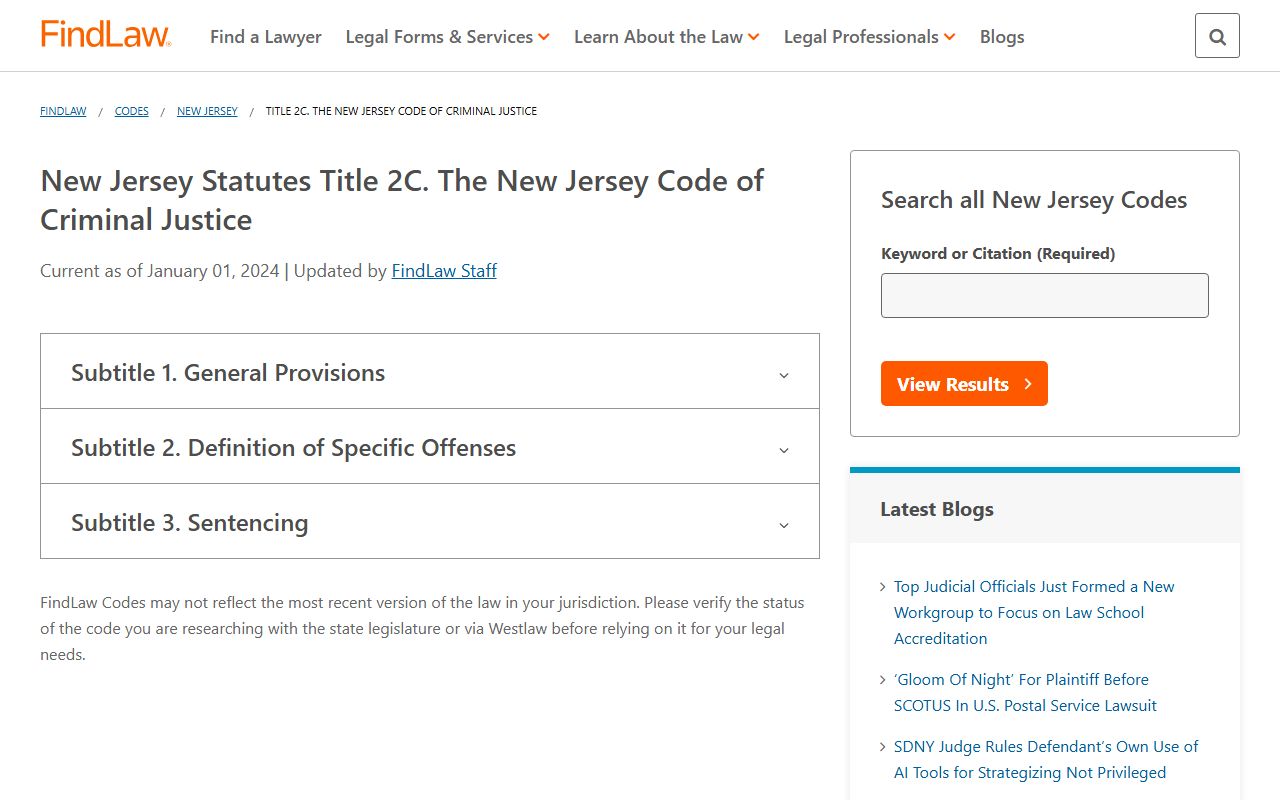
These statutes define the legal basis for every warrant issued by courts in New Jersey.
New Jersey Warrant Records and Public Access
The Open Public Records Act governs access to government records in New Jersey. Known as OPRA, this law is found at N.J.S.A. 47:1A-1 et seq. It gives every person the right to request records from state and local agencies. This includes warrant records held by courts, police departments, and prosecutors. You submit a request using the official OPRA form. Agencies must respond within 7 business days.
There are limits to what OPRA covers. Criminal investigatory records are exempt under N.J.S.A. 47:1A-1.1. This means active investigation files are not available through OPRA requests. However, once a warrant has been served and the case moves through the courts, many records become public in New Jersey. Court records are generally open unless a judge seals them for a specific reason.
The New Jersey Open Public Records Act is enforced by the Government Records Council. You can view OPRA guidelines and forms on the GRC website.
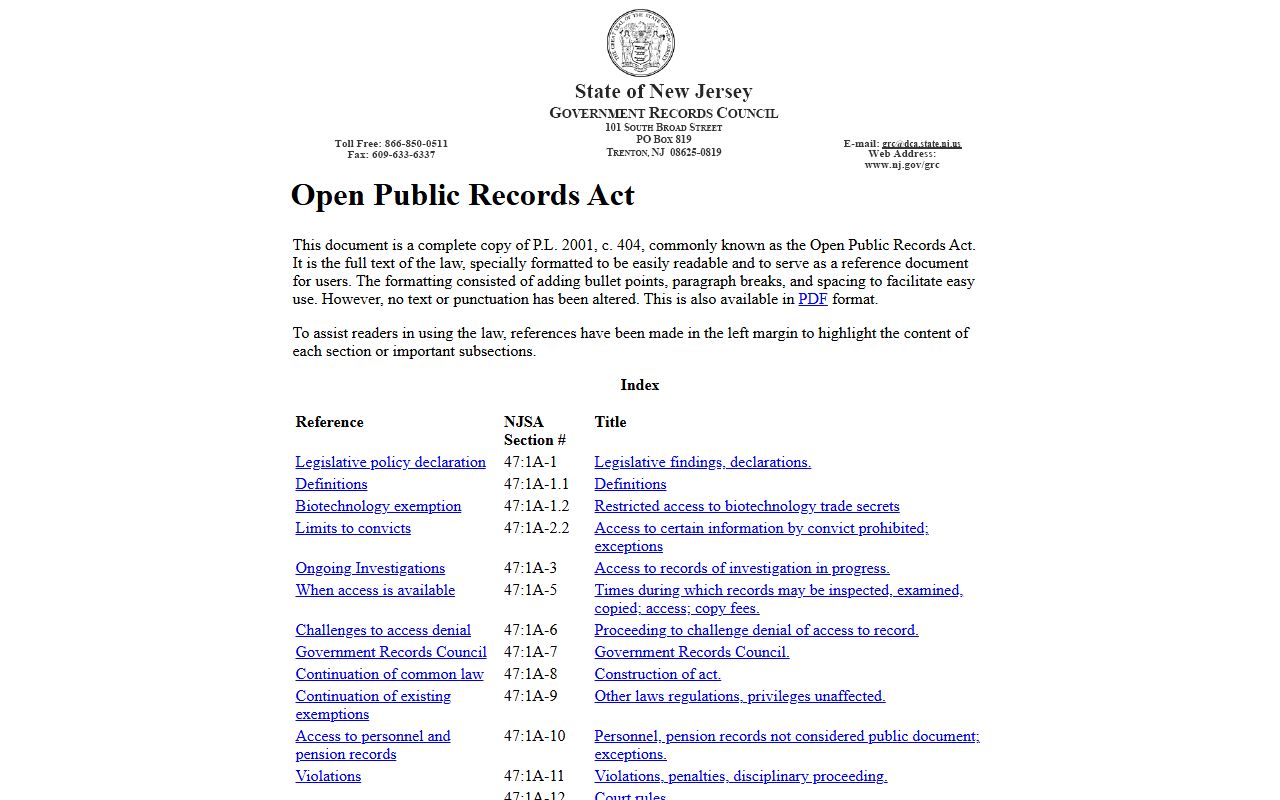
The GRC handles disputes when agencies deny OPRA requests for warrant records or other public documents in New Jersey.
Copy fees under OPRA are low. Agencies charge $0.05 per page for letter-size copies and $0.07 per page for legal-size copies. Some records can be provided by email at no charge. These rules apply across all state and local agencies in New Jersey. If an agency denies your request, you can appeal to the Government Records Council at no cost.
Note: Active criminal investigation files are exempt from OPRA, but court records for completed warrant cases are generally public in New Jersey.
New Jersey State Police Criminal History and Warrant Checks
The New Jersey State Police operate the Criminal Information Unit. The CIU manages criminal history records for the entire state. These records include warrant information, arrest records, and conviction data. A fingerprint-based check provides the most thorough results. The State Police use IDEMIA for fingerprint processing. You need Service Code 2F1BJG when scheduling a fingerprint appointment.
The cost for a state criminal history check is $45.73. Results come back within 24 to 72 hours in most cases. This check searches New Jersey records only. It does not cover federal or out-of-state warrants. For federal warrant records, contact the U.S. District Court for the District of New Jersey or the U.S. Marshals Service.
The Criminal Investigations Bureau of the New Jersey State Police handles warrant-related operations statewide. This resource provides information about the criminal history check process.
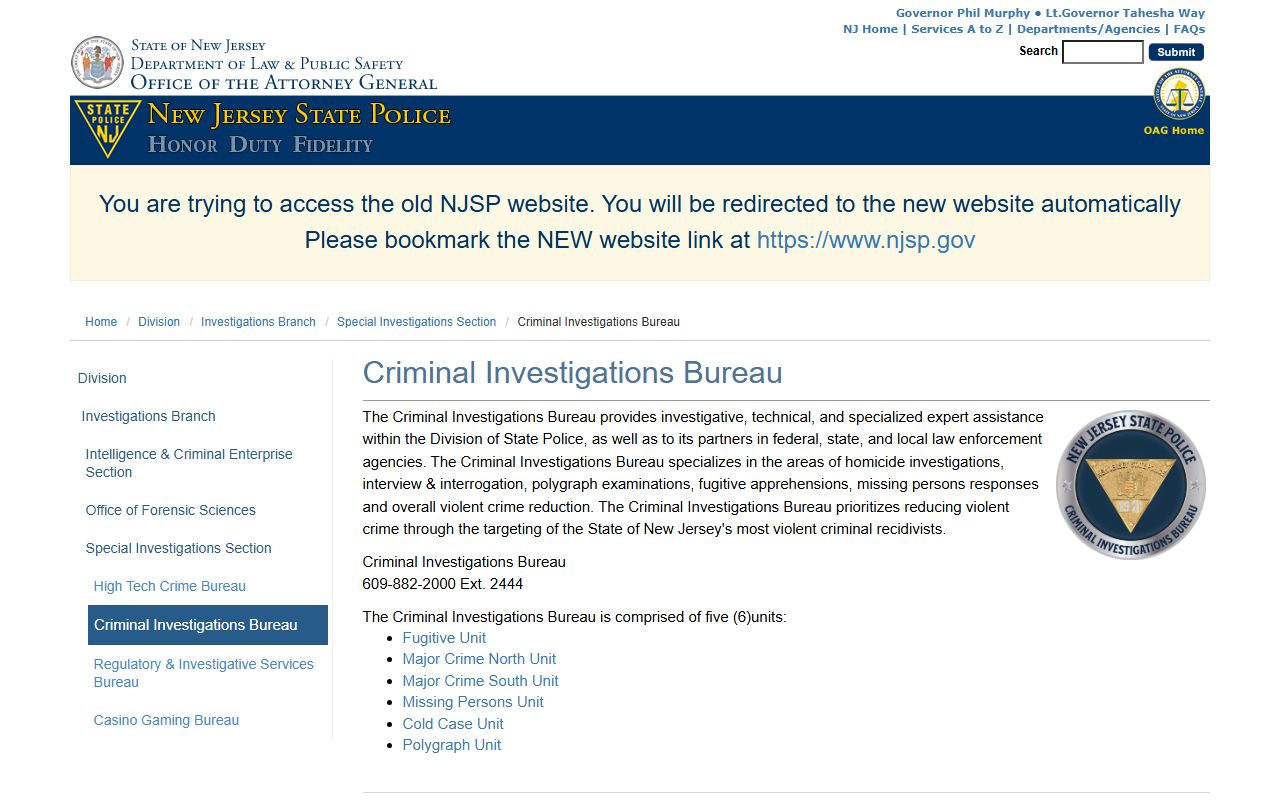
The State Police also operate the Fugitive Unit, which tracks people with outstanding warrants across New Jersey.
If you have information about a wanted person, you can call the State Police tip line at 1-800-437-7839. Tips can be made without giving your name. The Fugitive Unit works with local and county law enforcement to serve warrants and bring wanted persons before the court. Their work helps keep New Jersey warrant records current and accurate.
NJ Courts Online Systems for Warrant Records
The New Jersey Judiciary runs several online tools for searching court records. PROMIS/Gavel Public Access is the main portal for felony-level cases. It is free to use. You can search by name, indictment number, or complaint number. Results show the charges, case status, and scheduled court dates. This system covers all Superior Court criminal cases across New Jersey's 21 counties.
The PROMIS/Gavel system provides free access to Superior Court warrant records throughout New Jersey.
This portal is the fastest way to check for active warrant records tied to Superior Court cases in New Jersey.
The Criminal Judgments database is another useful tool. It covers judgments entered since June 30, 2017. You can search for final case outcomes and sentencing details. This helps when you need to confirm whether a warrant case was resolved. The database is free and available through the New Jersey Courts website.
For more detailed access, the Electronic Access Program provides in-depth court records. This paid service costs $4 per minute of use. It gives access to records not shown in the free public portals. Legal professionals and researchers often use this service. It covers civil, criminal, and family court records across all counties in New Jersey.
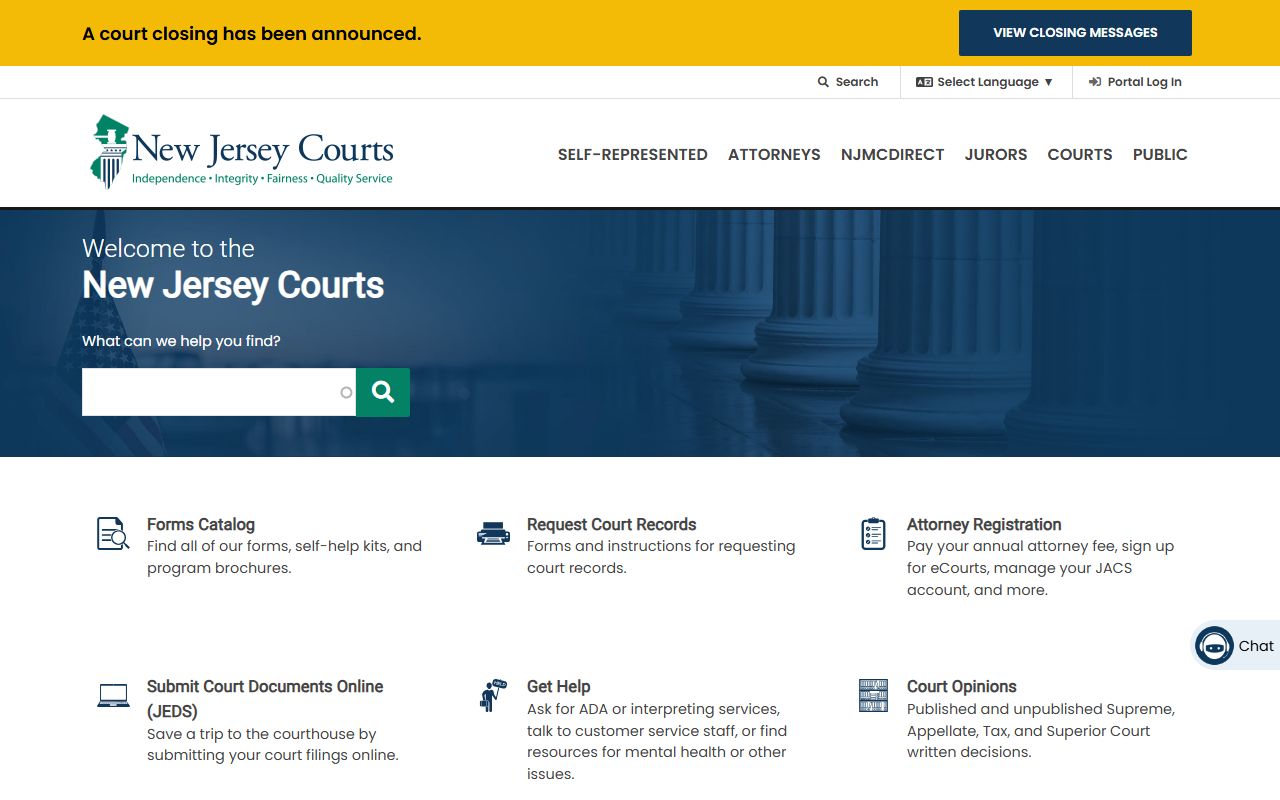
The New Jersey Judiciary website links to all of these search tools from one place. This is the official site of the state court system.
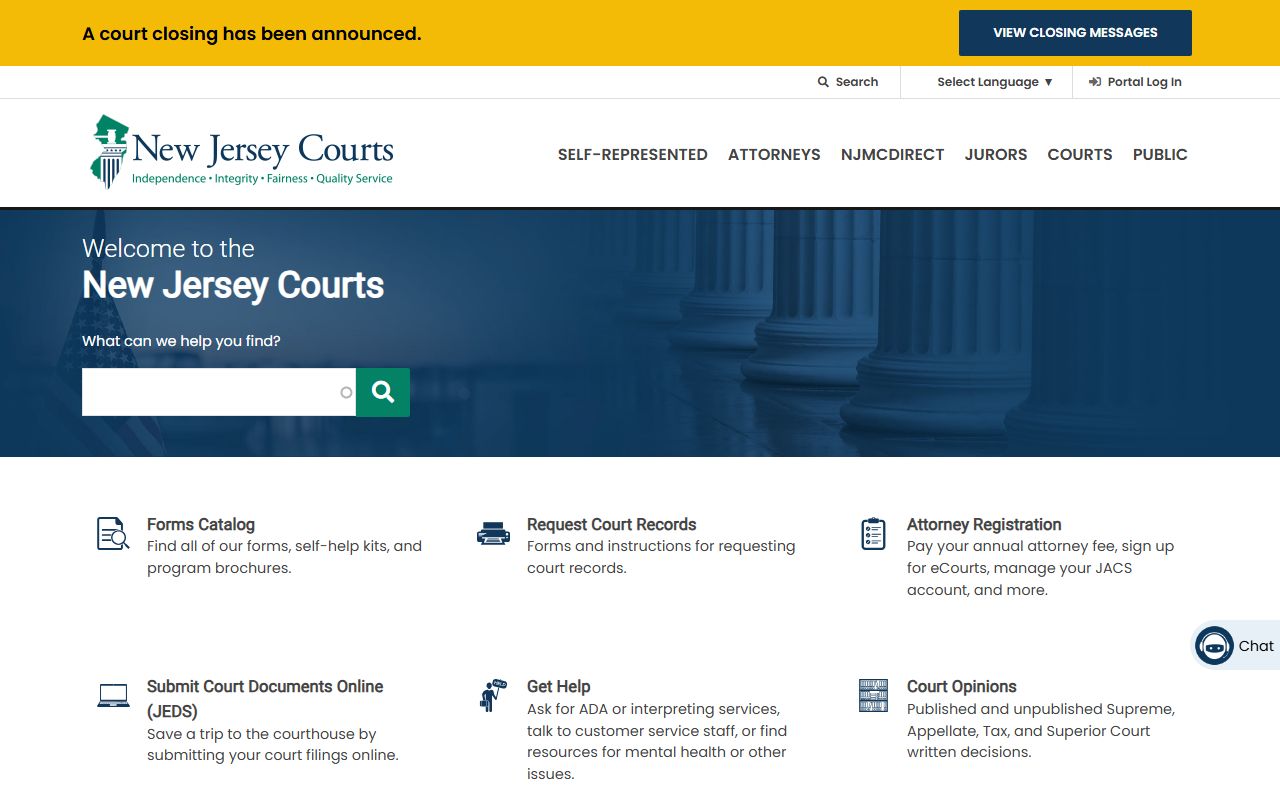
Start here to find links to every court record search tool available in New Jersey.
Attorney General Warrant Directives in New Jersey
The New Jersey Attorney General issues directives that shape how warrants are handled across the state. AG Directive 2022-6 is one of the most important recent changes. It addresses bench warrants in municipal court. The directive set a $500 bail threshold below which defendants can be released on their own recognizance. This changed how courts handle low-level bench warrants in New Jersey.
Under this directive, anyone arrested on a municipal court bench warrant must receive a bail review hearing within 48 hours. This rule prevents people from sitting in jail for long periods on minor warrants. The directive applies to all municipal courts in New Jersey. It was part of a broader effort to reform the state's approach to bench warrants and pretrial detention.
New Jersey has also run warrant amnesty programs. These programs let people with outstanding warrants turn themselves in without facing immediate arrest. They can resolve their cases and clear the warrants from their records. Amnesty programs vary by county and are announced by local courts. They reduce the number of active warrants in the system and help people get right with the court.
The state also offers an Expungement Portal for people who want to clear old records. Expungement removes certain offenses from a person's criminal history. This can include old warrant records tied to cases that were dismissed or resolved. The portal walks users through the process step by step. It is available through the New Jersey Courts website.
New Jersey warrant records reflect policies set by the state Attorney General.
AG directives guide how law enforcement and courts process warrants across all 21 counties in New Jersey.
Federal Warrant Records in New Jersey
Federal warrants are separate from state warrant records. The U.S. District Court for the District of New Jersey handles all federal criminal cases in the state. Federal judges issue warrants for crimes that violate federal law. These include drug trafficking, fraud, weapons charges, and other offenses under federal jurisdiction. Federal warrant records are maintained by the federal court system, not by New Jersey state courts.
The U.S. District Court operates from three locations in New Jersey. The main courthouse is in Newark. There are also courthouses in Trenton and Camden. Federal cases are assigned to one of these locations based on where the alleged crime occurred. Each location maintains its own records for cases heard there.
The U.S. District Court for the District of New Jersey maintains federal warrant records at courthouses in Newark, Trenton, and Camden.
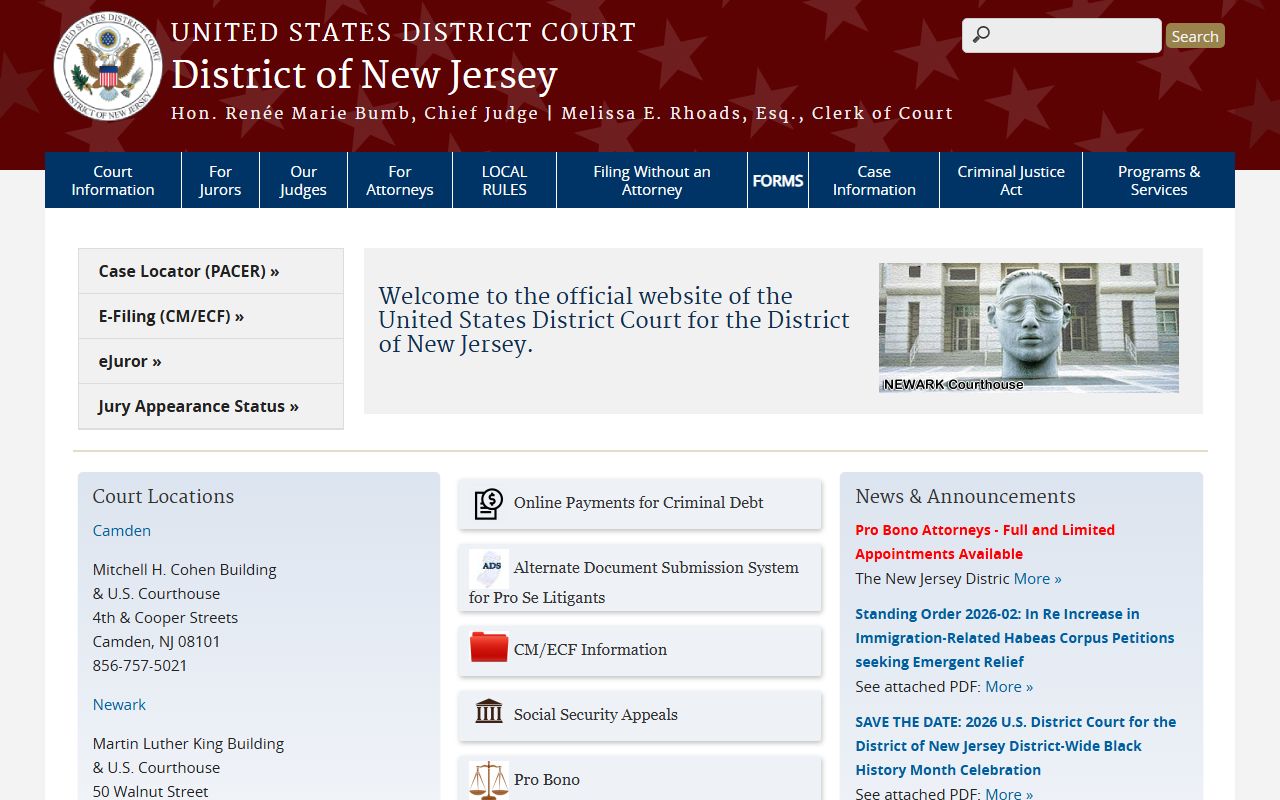
Federal warrant records are searched through PACER, not through the state court systems in New Jersey.
The U.S. Marshals Service handles federal fugitives in New Jersey. You can reach their office at 973-645-2404. They work with state and local agencies to serve federal warrants. The FBI Newark field office also plays a role in federal warrant cases. Their main number is 973-792-3000. Both agencies maintain records of federal warrants that are active in the state.
Note: Federal warrant records do not appear in New Jersey state court databases like PROMIS/Gavel or MCCS.
Browse New Jersey Warrant Records by County
Each county in New Jersey has its own court system that maintains warrant records. Pick a county below to find local resources and contact details for warrant records in that area.
Warrant Records in Major New Jersey Cities
Residents of major cities can search for warrant records at their county courthouse or through the state's online court systems. Pick a city below to learn about warrant records in that area.